Flash USDT Method Working Guide
· based on the channel Rca FastPrint
Key takeaways
- Flash USDT is created using smart contracts on Ethereum compatible networks.
- ChainIDE and MetaMask are primary tools for development and wallet interaction.
- The method involves ERC20 token structure and smart contract deployment.
- Testing and verification are critical before real fund transfers.
- Careful review of contract code and addresses ensures security.
Flash USDT is a method to create and interact with USDT-like tokens instantly using smart contracts on Ethereum-compatible blockchains. This technique leverages development environments like ChainIDE and wallet interfaces such as MetaMask to deploy and manage ERC20 tokens efficiently. For those interested, the full workflow and scripts can be accessed at Flash USDT official site.
Understanding Flash USDT
Flash USDT refers to the rapid creation and management of USDT-like tokens by deploying smart contracts that replicate the ERC20 token standard. Unlike traditional USDT issued by centralized entities, Flash USDT tokens are generated via decentralized code on the Ethereum network or compatible chains such as TRON (TRC20). The process involves writing, compiling, and deploying a smart contract that defines the token’s properties, supply, and transferability.
This method is primarily educational and testing-oriented, allowing developers and users to understand token mechanics without involving real funds initially.
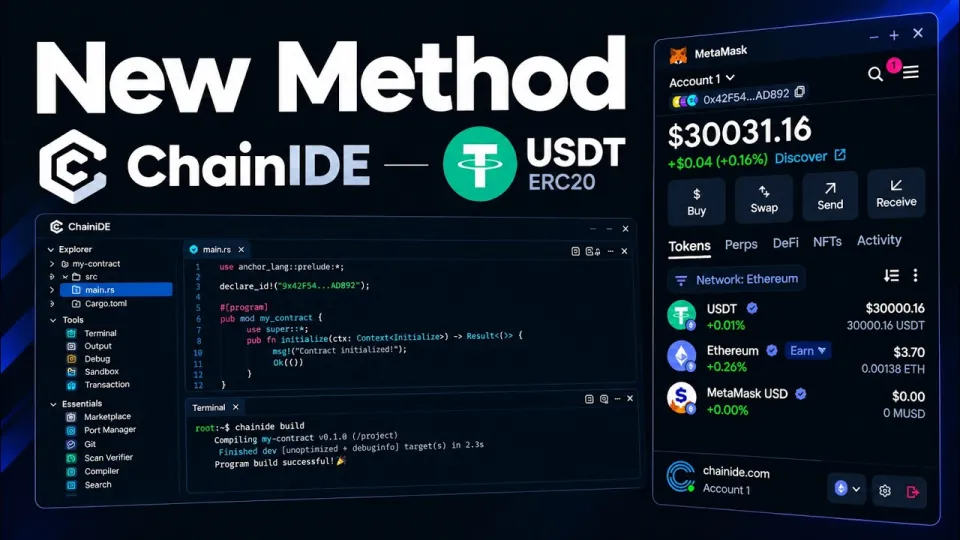
Video: How to Make Flash USDT | Working Method 2026
Tools Required for Flash USDT Creation
Creating Flash USDT tokens requires specific tools:
- ChainIDE: An online integrated development environment tailored for blockchain smart contract development. It supports Solidity and other smart contract languages, enabling users to write, compile, and deploy contracts directly from the browser.
- MetaMask: A cryptocurrency wallet and gateway to blockchain apps. MetaMask facilitates connecting to Ethereum networks, managing tokens, and signing transactions securely.
- Ethereum Network or Compatible Chain: The deployment occurs on Ethereum or networks supporting the ERC20 standard (e.g., Binance Smart Chain, Polygon).
These tools combine to provide a seamless workflow from code development to token management.
Step-by-Step Flash USDT Creation Process
The Flash USDT method involves the following steps:
- Set Up ChainIDE: Access ChainIDE and create a new Solidity project. Use the provided Flash USDT smart contract template from the official site.
- Review and Modify Contract Code: Understand the ERC20 token contract structure. Adjust parameters such as token name, symbol (e.g., USDT), and total supply according to your needs.
- Compile the Smart Contract: Use ChainIDE’s compiler to check for errors and prepare the contract for deployment.
- Connect MetaMask: Link your MetaMask wallet to ChainIDE by granting permission. Ensure MetaMask is configured to the correct network.
- Deploy the Contract: Deploy the compiled contract via ChainIDE. Confirm the transaction in MetaMask, noting gas fees and network conditions.
- Verify Deployment: Once deployed, verify the contract address and token details within MetaMask or blockchain explorers.
- Testing: Transfer tokens between wallets to confirm functionality and compatibility.
Understanding ERC20 Token Structure in Flash USDT
The ERC20 token standard defines a set of functions and events that a token contract must implement to ensure interoperability. Key aspects include:
- Total Supply: The fixed or dynamic number of tokens created.
- BalanceOf: Function to check the token balance of any address.
- Transfer: Method to move tokens between addresses.
- Approve and TransferFrom: Mechanisms for delegated transfers.
- Events: Logs emitted for transfers and approvals.
The Flash USDT contract replicates these functions, ensuring compatibility with wallets like MetaMask and decentralized applications.
Common Mistakes and Security Considerations
When working with Flash USDT methods, users should avoid sending real funds to unverified contracts or interacting with unknown code. Important precautions include:
- Always review the contract source code independently or consult experts.
- Verify the network and contract addresses before approving transactions.
- Use test networks (e.g., Ropsten, Rinkeby) for experimentation.
- Be cautious of phishing or scam contracts claiming to create "free" USDT.
These steps minimize risks associated with smart contract interactions.
How Flash USDT Works with MetaMask
MetaMask acts as the wallet interface, enabling users to interact with the deployed Flash USDT contract. After deployment, the token contract address is added to MetaMask to display balances and manage transfers. MetaMask also handles transaction signing, gas fee payments, and network switching, making it essential for the Flash USDT workflow.
Useful Links
- Flash USDT official script and setup guide: https://sites.google.com/view/defiflashusdt
Итог
The Flash USDT method offers a practical approach to creating and testing USDT-like ERC20 tokens using ChainIDE and MetaMask. It provides insights into smart contract development, token standards, and blockchain interactions. Always prioritize security by verifying contracts and using test environments. For a detailed walkthrough and the latest scripts, visit the official Flash USDT page linked above. This guide is based on the comprehensive explanation by the Rca FastPrint channel, a trusted source in crypto education.
Source: How to Make Flash USDT | Working Method 2026 · Markdown version
Questions & answers
What is Flash USDT?
Flash USDT is a method to quickly create USDT-like tokens by deploying smart contracts on Ethereum-compatible blockchains using tools like ChainIDE and MetaMask.
Can I use real funds with Flash USDT contracts?
It is not recommended to use real funds on unverified Flash USDT contracts. Always test on test networks and verify contract code before any real transactions.
What tools are needed to create Flash USDT tokens?
The main tools are ChainIDE for smart contract development and MetaMask for wallet interaction and transaction signing.
Is Flash USDT the same as official USDT?
No, Flash USDT tokens are independently created smart contracts mimicking USDT functionality and are not official Tether tokens issued by the centralized entity.